Thinking about buying a waterfront home in Forked River? It is easy to focus on the view first, but the smartest buyers know the real story is in the details behind the water. If you want a home that fits your lifestyle and helps you avoid costly surprises, you need to understand access, permits, flood risk, and upkeep before you make an offer. Let’s dive in.
Why Forked River Draws Waterfront Buyers
Forked River is part of Lacey Township in Ocean County, with the township’s eastern edge along Barnegat Bay. That matters because water is not just scenery here. It is part of daily life, with local access points for canoes, kayaks, row boats, and paddle boards, plus municipal boat slips for qualified residents and property owners.
For many buyers, that mix of residential living and water access is the big draw. You can explore homes that connect to boating and paddling while still being part of an established year-round community. In other words, Forked River offers more than a seasonal waterfront feel.
Know the Main Waterfront Property Types
Not all waterfront homes in Forked River offer the same experience. Buyers here often compare bayfront, lagoon-front, canal-front, and marina-adjacent properties. Each one can come with a different mix of views, boat access, maintenance needs, and rules for future improvements.
Bayfront homes
Bayfront homes often appeal to buyers who want wide water views and a stronger connection to Barnegat Bay. The tradeoff can be more exposure to weather and water conditions. You may also face different site conditions when evaluating docks, bulkheads, or elevation needs.
Lagoon-front and canal-front homes
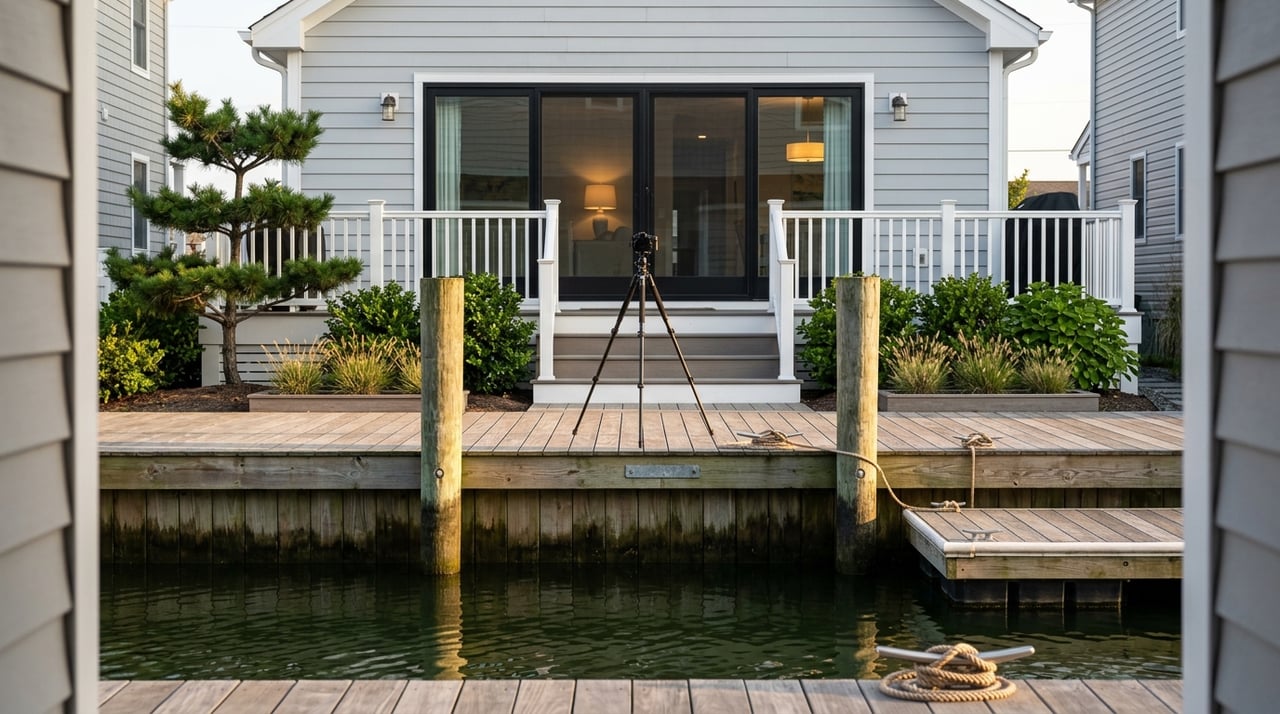
Lagoon-front and canal-front homes are common options for boating-focused buyers. In New Jersey, man-made lagoons have specific permit pathways for features like docks, piers, pilings, boat lifts, and jet ski ramps. That makes it especially important to verify what already exists on the property and whether it was properly authorized.
Marina-adjacent homes
Marina-adjacent properties can be appealing if you want to stay close to boating without depending on a private dock at home. Still, being near a marina is not the same as having guaranteed slip access. If the property’s boating setup depends on a marina or public slip, you should confirm exactly how that works before moving forward.
Water Views and Water Rights Are Different
One of the biggest mistakes buyers make is assuming that a home near the water automatically comes with simple docking rights or easy future improvements. In reality, a great view and usable boat access are two different things. A property may sit on the water but still have separate rules for docks, lifts, bulkhead work, or expansion.
That is why you should ask what is included with the property right now, not what seems possible at first glance. If there is a dock, lift, or pier, find out whether it is private, shared, leased, or not included at all. Clear answers early can save you time and frustration later.
Understand Dock and Bulkhead Rules
In coastal New Jersey, docks, piers, bulkheads, and similar structures are regulated by the New Jersey Department of Environmental Protection. Before construction in the coastal zone, a permit is required under most circumstances. That applies not only to major projects, but also to many changes buyers may want to make after closing.
If you are considering a waterfront home in Forked River, you should confirm whether the current dock, lift, pier, or bulkhead is legal and permitted. You should also ask whether any reconstruction, repair, or reconfiguration has been done. Those details matter because existing waterfront improvements may only be allowed under specific authorizations.
Lagoon and marina work has specific pathways
NJDEP treats man-made lagoons and legally existing marinas differently from standard inland residential lots. The state has specific certification and permit pathways for items like lagoon docks, pilings, boat lifts, and marina dock reconfigurations. That means two homes with similar water frontage may have very different rules depending on the site and setup.
Boat Slips in Forked River
Lacey Township offers municipal boat slips through its Department of Public Works. For buyers, that can be a helpful local option if the home itself does not include a private place to keep a boat. But it is important to understand that slip access is not automatic.
The township prioritizes residents and township property owners, and applicants need valid boat registration and boat liability insurance. The slips are seasonal, and the township maintains a waitlist for openings. If nearby slip access is part of your plan, you should treat that as something to confirm, not assume.
Flood Risk Is a Core Part of the Decision
Any waterfront purchase in Forked River should include a close look at flood exposure. In New Jersey, flood disclosure is now part of the home purchase process. Since March 20, 2024, sellers must disclose whether a property is in FEMA’s Special Flood Hazard Area or Moderate Flood Hazard Area, along with any actual knowledge of flood risk.
That gives buyers a clearer starting point, but it should not be your only step. NJDEP notes that flood exposure is not limited to obviously low-lying parcels, so it is smart to verify the exact flood zone for the property and get a current insurance quote. Two nearby waterfront homes can carry very different risk and insurance costs.
Flood insurance may be required
If a home is in FEMA’s Special Flood Hazard Area and you are using a government-backed mortgage, flood insurance is required. Even when it is not required by the loan, buyers often want to understand the ongoing insurance picture before they commit. This is one of those costs that can shape affordability more than buyers expect.
Tidelands Issues Matter on Waterfront Homes
Tidelands are another important part of buying near the water in New Jersey. According to NJDEP, some waterfront properties may need separate licenses for fixed structures or bulkhead extensions. A Statement of No Interest is the state’s official document showing that a parcel is free from tidelands claims.
For buyers, the takeaway is simple: ask whether the seller has any tidelands documentation, riparian grant records, or a Statement of No Interest. These are not small technicalities. They can affect how you understand the property and what improvements may be possible.
Waterfront Ownership Means Ongoing Maintenance
A waterfront home can offer a lifestyle you may love, but it also comes with upkeep that inland buyers do not always expect. Bulkheads age. Docks need attention. Water access conditions can change over time. Some homes may also have a history of dredging needs or shoreline-related repairs.
NJDEP says coastal properties in New Jersey face pressure from flooding, coastal storms, climate change, and development. The department also updated coastal, flood hazard, wetlands, and stormwater rules in early 2026 to improve resilience. For buyers, the practical point is that long-term durability and maintenance planning deserve just as much attention as the view from the backyard.
Questions to Ask Before You Offer
Before you fall in love with a waterfront address, slow down and ask the right questions. A little extra digging upfront can help you avoid major surprises after closing.
Here are some of the most important questions to ask:
- What type of water frontage is this: bayfront, lagoon-front, canal-front, or marina-adjacent?
- Are the dock rights private, shared, leased, or not included?
- Is the dock, lift, pier, or bulkhead legal and permitted?
- Has the property ever needed dredging?
- What is the exact flood zone, and what does current flood insurance cost?
- Does the seller have flood-history documentation?
- Are there any tidelands claims, riparian grants, or a Statement of No Interest?
- If the home depends on a slip, what are the current availability rules and waitlist details?
- Are there any HOA or marina restrictions on boat size, storage, rentals, or exterior changes?
A Smarter Way to Compare Waterfront Homes
When you tour homes in Forked River, it helps to compare them with a consistent checklist rather than going by appearance alone. Two homes may look similar online but carry very different ownership costs, risks, and boating setups. That is where local waterfront knowledge becomes valuable.
A clear side-by-side review of flood zone, dock setup, bulkhead condition, and permit history can help you make a better decision. This is especially true if you are buying a second home, relocating, or shopping from outside the immediate area. The goal is not just to find a beautiful home, but to find one that fits how you actually want to live on the water.
Why Local Guidance Helps
Forked River waterfront homes come with layers that do not always show up in listing photos. Access, permitting, flood exposure, slip options, and tidelands questions can all affect whether a property is a great fit or a future headache. That is why many buyers want straightforward guidance from someone who understands the local coastal market.
If you are starting your search, the best next step is to focus on clarity. Know the type of waterfront you want, verify the property details, and build your decision around facts rather than assumptions. When you are ready for honest local insight on waterfront and lagoon homes in Ocean County, connect with Alicia Daniels.
FAQs
What should you check before buying a waterfront home in Forked River?
- You should check the water frontage type, dock rights, permit status for docks or bulkheads, flood zone, insurance costs, tidelands documentation, and any slip or marina rules.
Are municipal boat slips available for Forked River buyers?
- Lacey Township offers municipal boat slips through the Department of Public Works, with priority for residents and township property owners, plus requirements for valid boat registration and boat liability insurance.
Does every waterfront home in Forked River come with private dock access?
- No. Some homes may have private docks, while others may have shared access, leased access, nearby marina options, or no direct docking rights at all.
Why do flood zones matter when buying a Forked River waterfront home?
- Flood zones affect disclosure, insurance costs, and in some cases insurance requirements, especially if the property is in FEMA’s Special Flood Hazard Area and the mortgage is government-backed.
What is a Statement of No Interest on a New Jersey waterfront property?
- It is the state’s official document showing that a parcel is free from tidelands claims, and it can be an important item to review during a waterfront purchase.
Are lagoon-front homes in Forked River regulated differently?
- Yes. NJDEP has specific permit pathways for structures and improvements in man-made lagoons, including docks, pilings, boat lifts, and certain related work.